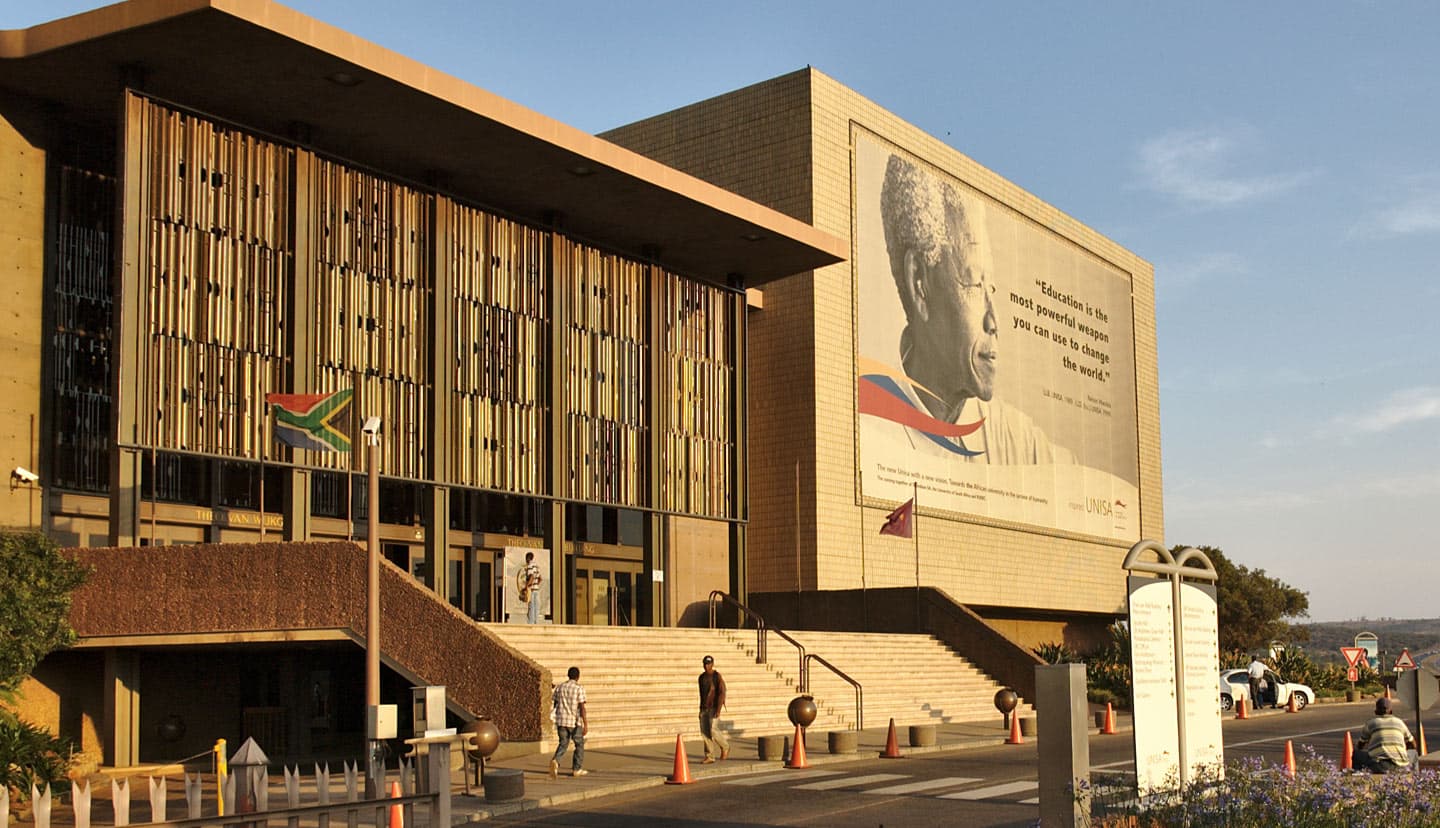
Wits University
Wits has managed institution-wide budgeting with IDU since 2009. Sixteen years on, they have never found a reason to leave.
“Every five years we have to go out to tender. Up until now, we haven’t found another budgeting partner we can actually work with. We always put in a motivation to extend IDU’s contract.”
— Divisional Financial Manager, University of the Witwatersrand

Wits (The University of the Witwatersrand) is one of South Africa’s leading research universities, with a large and complex annual budget spanning dozens of faculties, schools, and administrative divisions. Managing that process centrally, while giving budget owners across the institution meaningful visibility into their own figures, demands a tool built for the task. Rakhee Maharajh, Divisional Financial Manager in the management accounting office, has been at the centre of that process for over two decades. She has been doing it with IDU for sixteen of them.
Before IDU, the budgeting process looked the way it did at most large institutions: a proliferation of Excel files, multiple versions accumulating across shared drives, and a consolidation exercise that consumed more time than the analysis it was supposed to enable. The team tried other tools, including the budgeting module from their own financial system, Oracle, but found the same fundamental limitation. “Even Oracle’s budgeting tool is basically very Excel-based,” says Maharajh. “It’s a spreadsheet. You put figures in there and you just upload it.” The consolidation problem remained unsolved.
“We went through a lot of tools before we found IDU. We didn’t even think twice about actually implementing it.”
— Rakhee Maharajh, Divisional Financial Manager, University of the Witwatersrand
When Kevin Phillips and the IDU team came in to demonstrate the platform, the decision was straightforward. The system was cost-effective, purpose-built for the kind of budget complexity Wits needed to manage and offered a feature that immediately set it apart: employee-level budgeting. The ability to plan by individual staff member, rather than at an aggregate level, was a significant draw for an institution where people costs represent the majority of expenditure. Wits implemented IDU in 2009 and has not looked back.
What has followed is a sixteen-year relationship. Configuration, administration, and the annual budget cycle is handled by the Finance team with IT involved only in the backend infrastructure. That lean setup reflects something important about the platform: it is genuinely manageable. Users across the institution access their budgets, get a bird’s-eye view of their cost centres, and run their planning without needing a dedicated support team behind every step.
A partner in success
Margie Whitten, Director at IDU, says: “Wits is one of our longest-standing clients, and that longevity speaks for itself. Rakhee and Daniel have built a lean, stable, well-run budget process serving an entire university. We’re proud of this partnership and committed to continuing to support and grow with the Wits team for many more years.”
The support relationship has been as enduring as the software itself. Rakhee describes a help desk that responds quickly regardless of time zone, citing a consultant in New Zealand who is consistently available when needed. A recent server migration, which might have been a significant disruption, was handled seamlessly with minimal effort required from Wits. “You just drop them a line,” she says. “They are such a good team to actually work with.”
The platform has grown with the institution’s needs. Wits recently extended their use of IDU to include course-level budgeting, reflecting the university’s specific planning structure. The budget uplift feature has since removed the need for manual line-by-line capture or exports; it now runs at the click of a button. The team attends IDU’s annual conference each year, bringing a new colleague each time to deepen the connection between the institution and the wider IDU community.
Most tellingly, Wits is required by policy to go to tender with all major suppliers every five years, a formal process that puts IDU’s contract up for review and opens the field to competitors. Every single time, the outcome has been the same. “Up until now, we haven’t found another budgeting partner we can actually work with,” says Maharajh. “We always put in a motivation to extend IDU’s contract.” Sixteen years in, that motivation has never been difficult to make.
“IDU is a brilliant tool. It’s simple, it’s cost effective, and sixteen years later I’m still doing it by myself. That says everything.”
— Rakhee Maharajh, Divisional Financial Manager, University of the Witwatersrand